 Johns CreekCommercial Stucco & EIFS
- Home
- Services
- Waterproofing & Sealants
Commercial Waterproofing in Johns Creek, GA
Most leaks in Johns Creek commercial buildings enter through joints and transitions, not through the stucco itself. We replace failed sealant and expansion joints, correct flashing, and apply coatings that keep water out of the building envelope.
- Sealant replacement programs
- Expansion joint repair
- Flashing & parapet details
- Elastomeric & breathable coatings
Request a commercial quote
Johns Creek commercial stucco & EIFS. Property managers, boards, owners & builders.
Sealant is the part of the wall that wears out first
Stucco and EIFS can last for decades. The sealant that closes the gaps around them does not. Every window and storefront perimeter, every expansion joint between panels, and every place stucco meets brick, metal or a roof edge depends on a bead of sealant that hardens, shrinks and loses its bond after years of Georgia sun and heat. Many Johns Creek office buildings and shopping centers are still on their original joints, or on a round of caulk applied over them.
Caulking over old sealant does not fix the problem. We cut out failed joints, clean and prime the edges, set new backer rod at the right depth and install sealant sized for the movement the joint actually sees. At roof-to-wall transitions, parapets and window heads we check that flashing is present and lapped correctly, because sealant cannot stand in for a missing flashing.
Where a wall has hairline cracking across the face, an elastomeric or breathable coating can add a layer of protection. We recommend the coating type based on the system on the wall, since the wrong one can trap moisture instead of shedding it.
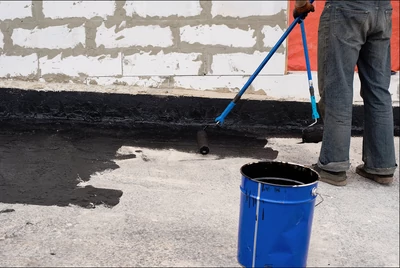
Commercial waterproofing work in Johns Creek
These are the details we check and correct on office, retail, multifamily and hospitality buildings.
Sealant replacement programs
Old sealant is cut out, joints cleaned and primed, and new backer rod and sealant installed, building-wide or elevation by elevation.
Expansion joints
Failed expansion and control joints are rebuilt and sized so the joint can move with the building instead of tearing.
Window & storefront perimeters
Perimeter sealant, sill flashing and head details are corrected so water running down the wall is turned out, not in.
Parapets & roof-to-wall
Parapet caps, coping joints and roof-to-wall flashing are corrected where water enters the top of the wall.
Elastomeric & breathable coatings
Elastomeric coatings to bridge fine cracks, or breathable coatings where the wall needs to dry outward, chosen for the substrate.
Penetrations & attachments
Tenant signage, light fixtures, mechanical lines, railings and balcony attachments are flashed and sealed where they pass through.
Choosing the right waterproofing scope
A coating can’t fix a missing flashing, and new sealant won’t help a parapet whose cap is open. We start with the details where water is actually getting in, and only recommend a coating when the face of the wall needs one.
Coating choice matters too. Elastomeric coatings bridge hairline cracks and shed rain well, but a non-breathable film over a wall that is already wet can trap moisture. Where readings show wet areas, we repair those first.
For sealant, the question is usually full program or targeted repair. If the joints are the same age everywhere, replacing them in one program is usually the better value. If failures are concentrated on one or two elevations, we can phase the work so it fits operating budgets or reserves.
| Scope | Best for | Result |
|---|---|---|
| Targeted sealant repair | Failures on one elevation | Leaks closed |
| Full sealant program | Joints the same age everywhere | Building resealed |
| Flashing correction | Parapet & opening leaks | Water turned out |
| Elastomeric coating | Sound wall, many hairline cracks | Cracks bridged |
| Breathable coating | Dry stucco needing protection | Sheds rain, dries out |
How we waterproof an occupied building
Sealant and coating work depends on weather and cure time, so we plan the sequence and access with you before work starts.
Survey & test
We walk every elevation, check sealant adhesion and condition, take moisture readings at windows and joints, and water test where tenants have reported leaks.
- Sealant condition by elevation
- Moisture readings mapped
- Leak points confirmed
Scope & phasing
You get an itemized scope that separates active leak repairs from preventive work, with phasing options by elevation or by building.
- Itemized by elevation
- Program or targeted options
- Access & scheduling plan
Seal, flash & coat
Failed joints come out and are rebuilt, flashing is corrected, any wet substrate found along the way is replaced, and coatings go on where the wall needs them.
- Joints primed & tooled
- Flashing corrected
- Daily cleanup
Tenants reporting leaks after storms?
That usually points to a joint or flashing detail. A water test can confirm the source before you commit to a full program.
Often paired with waterproofing
Sealant and flashing work often turns up damage that has to be repaired first, or a wall that should be tested before anything is sealed.
Envelope Inspections
Moisture surveys, water testing and written condition reports for owners, boards, lenders and buyers.
Learn more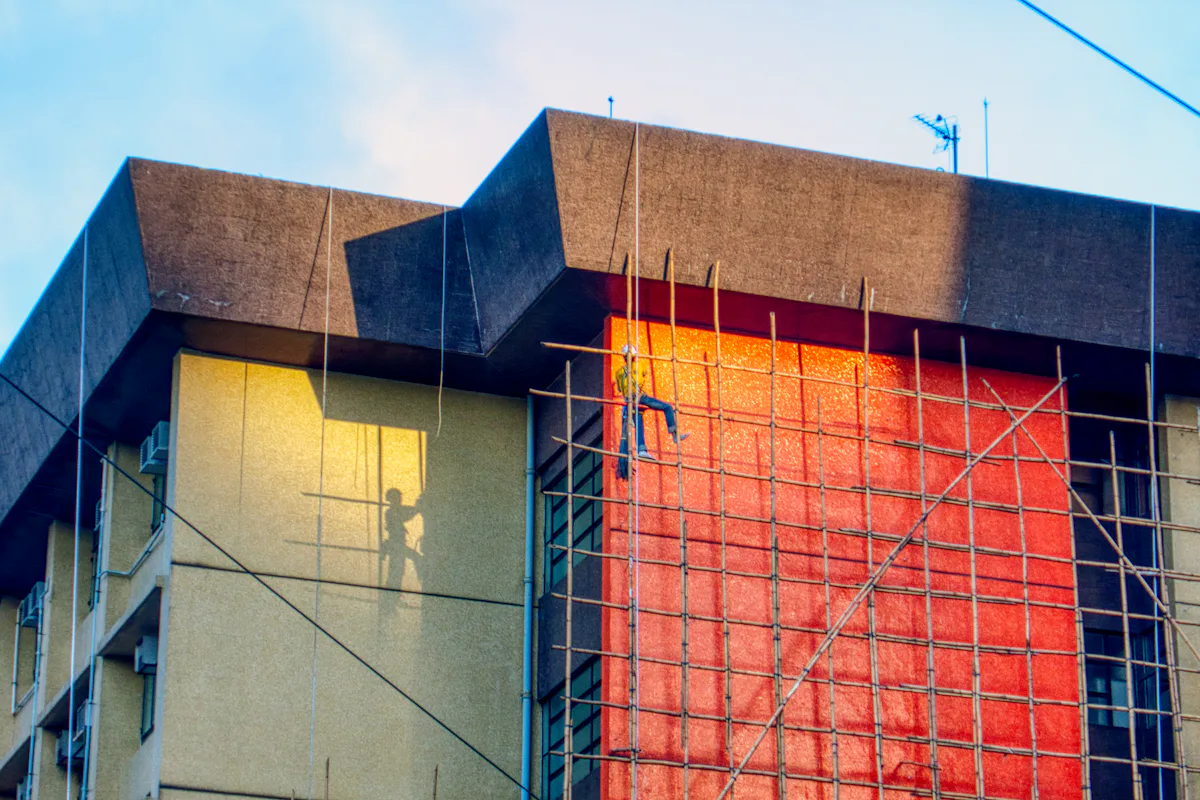
Commercial Stucco Repair
Cracks, impact damage, delamination and water damage on commercial facades, repaired at the source and matched to the building.
Learn more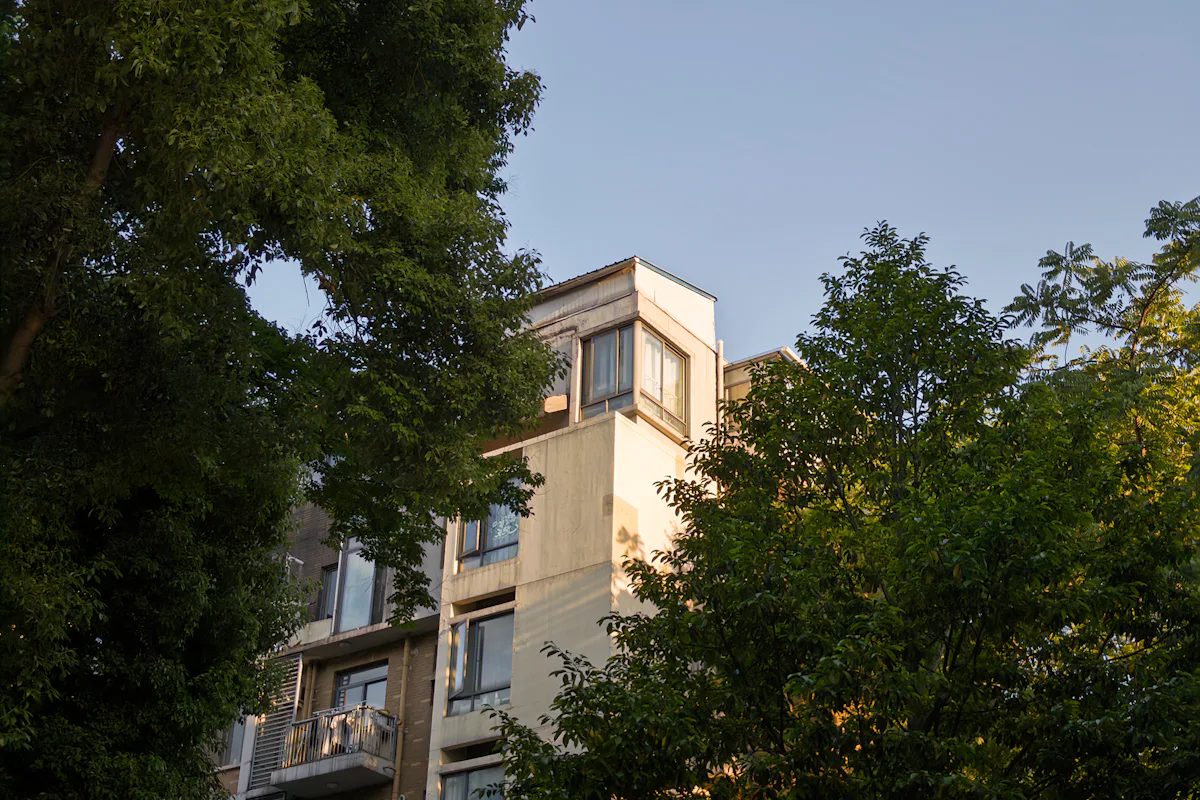
Condominiums & HOAs
Reserve-study repairs, balconies, sealants and full-building recoats for condominium associations.
Learn moreStorms from above, sprinklers from below
Johns Creek buildings get water from two directions, and a waterproofing scope here has to account for both.
Summer thunderstorms drive rain sideways into window perimeters, parapet joints and the top of the wall. At the same time, the well-kept landscaping that lines Johns Creek's commercial frontage keeps irrigation running against the base of the wall, often over weep screeds that have been buried by mulch, pavers or raised beds over the years.
We look at both: joints and flashing up high, drainage and clearance down low.
UV-aged sealant
South- and west-facing elevations where joints harden and split first.
Wind-driven rain
Storm exposure at window heads, parapet caps and roof-to-wall transitions.
Buried wall bases
Weep screeds and terminations covered by mulch, pavers and sprinkler spray.
- Johns Creek
- Technology Park
- Medlock Bridge Road
- State Bridge Road
- McGinnis Ferry Road
- Kimball Bridge Road
- Alpharetta
- Duluth
- Berkeley Lake
- Suwanee
- Milton
Waterproofing & sealant questions in Johns Creek
What Johns Creek owners and facility managers ask about joints, flashing and coatings.
How often should sealant joints be replaced on a Johns Creek office building?
Can you adjust irrigation and landscaping issues at the base of our walls?
Is an elastomeric coating enough to waterproof a stucco building?
Can sealant work be done while tenants are open?
Do you replace expansion joints between buildings or wings?
Stop the leak at your Johns Creek property
Tell us where water is showing up. We will water test the likely entry points and send a written sealant and flashing scope.